When It Feels Like You’re Doing More Than They Are
When It Feels Like You’re Doing More Than They Are
Anchored Insights
Many high-functioning parents quietly carry more than they ever expected.
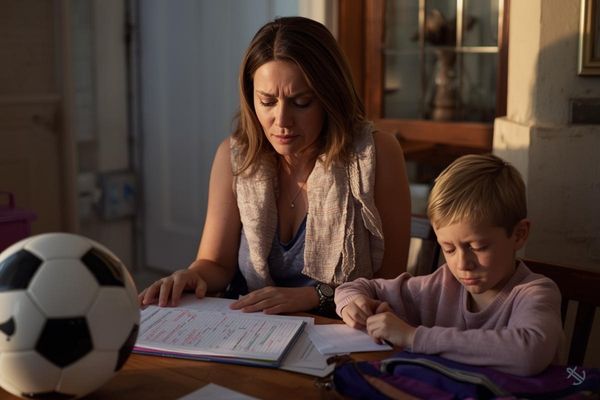
You remind.
You organize.
You sit beside them to keep homework moving.
You check what has been forgotten.
Not because you want control.
Because if you step back, everything stalls.
Over time, this becomes the system.
And underneath that system is often something we do not talk about enough.
Chronic stress.
Executive Function Cannot Grow in a Chronically Activated Brain
Executive function relies on consistent access to the prefrontal cortex.
That part of the brain supports:
Working memory
Task initiation
Cognitive flexibility
Emotional regulation
Planning and follow-through
When the nervous system is frequently overloaded, stress hormones rise and prefrontal efficiency declines.
What parents see at home is:
Delayed starting
Avoidance
Increased irritability
Emotional shutdown
Inconsistent follow-through
This is not simply lack of effort.
It is reduced neurological access.
How Chronic Stress Reinforces Over-Functioning
When tasks do not move forward, parents step in.
You reread directions.
You break down steps.
You keep the system afloat.
This is adaptive in the short term.
But over time, constant compensation reduces opportunities for regulated practice.
Independence does not grow when the nervous system remains activated.
It grows when children can practice small responsibilities inside a regulated state.
Why Pressure Backfires
Many families respond to stalled independence with more structure, more reminders, or more urgency.
Increased pressure raises stress.
Raised stress reduces executive function.
Reduced executive function increases dependence.
The cycle strengthens.
Without intentional nervous system recovery, growth slows.
Building Independence Through Regulation
Reducing chronic stress does not mean lowering expectations.
It means sequencing development correctly.
Independence grows when:
Decompression is predictable
Transitions are scaffolded
Expectations are adjusted to capacity
Responsibility is released gradually
Recovery is protected
Regulation is not indulgence.
It is infrastructure.
Summary
When it feels like you are carrying more than your child is, it may not be a motivation problem.
It may be a stress-load problem.
Chronic nervous system activation weakens executive function and reinforces parental over-functioning.
Independence strengthens when regulation is restored and expectations are scaffolded.
This month I am teaching more about how regulation builds executive function and long-term resilience.
If you are ready to shift from constant compensation to sustainable structure, that is the work.