Understanding Emotional Overload In Kids
Understanding Emotional Overload in Kids: When "Won't" Really Means "Can't Yet"
Anchored Insights
Many parents feel confused and discouraged when their child refuses simple directions. You ask them to pick up shoes, brush teeth, or start homework, and suddenly you are dealing with a meltdown, a shutdown, or a huge burst of emotion.
It is easy to assume this means your child “won’t” cooperate.
In reality, most kids in these moments “can’t yet.”
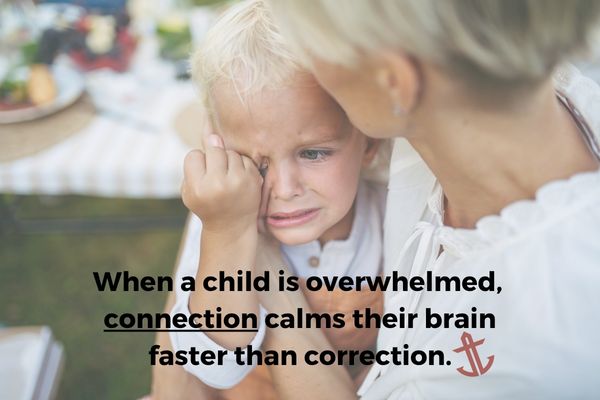
When a child feels overwhelmed, the part of the brain that helps with planning, problem-solving, and calming down goes quiet. The emotional part of the brain takes over. This is a stress response, not a choice.
Once we understand this, everything shifts.
Parents stop blaming themselves. Kids stop feeling defective.
Here are two simple ways to help:
• Slow down before stepping in. A calm parent can help bring a child back to center.
• See the skill gap. Ask yourself, “What skill is hard right now? Starting? Calming? Knowing what to do next?”
Over time, this approach builds trust and teaches kids the tools they need to handle stress.
And twenty years from now, these are the moments your child will remember. Not perfection. Not pressure.
But the feeling of being understood.
Author:
Dr. Grizelda Anguiano
Anchored Pediatric Mental Health & Anchored Coaching